







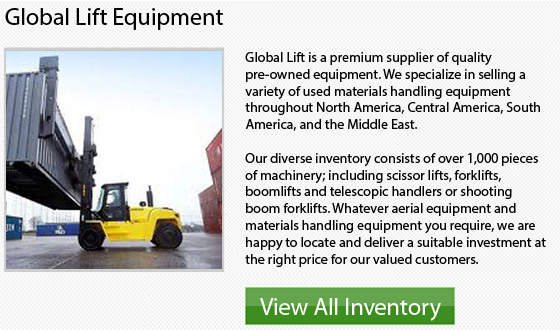
In order to help avoid the requirement for expensive lift truck repairs, it is suggested to check the front end of your lift truck frequently as part of your daily and even pre-shift examination. By catching any problems as they happen or in advance, you can also help prevent damage to any type of loads too. The following covers several of the general guidelines on what specific things to inspect during regular inspections of your material handling fleet.
Forks
It is essential to regularly check the forks because if they are cracked or worn out, they could probably fail without warning. Any type of fork damage means that your lift truck will need to instantly be removed from service until it is fixed and safe once again. Visually inspect your forks for any visible signs of damage or wear. If the cracks run deeper than on the surface, replace them. Any type of wear on the forks beyond 10 percent is another sign that you should replace the forks.
Mast
Ideally, the mast must tilt back and forward and be able to smoothly move up and down. If you find that the sliding surfaces are binding, you might have to lubricate the mast strip sliding surfaces as well as their fittings. On the inner mast there is a fitting situated on every side. The lift bracket side rollers are another lubrication point and there is also one on each side roller. Once the lubricating has been completed, tilt it backward and forward and also raise and lower the mast a few times in order to guarantee that the lubricant is worked into the fittings correctly.
Tilt Cylinders
Your daily inspection needs to involve the checking for oil leaks and damage because an uncontrolled mast movement can be a result of oil leakage. Whether the leaks are external or are located inside of the cylinder, the end result may be cylinder drift and loss of fluid. If there are any signs of leaks or damage, you might have to replace the entire cylinder assembly, or just the seals.
Chains
Inspect and make sure that the mast chains are not stretching beyond their acceptable limits. Also be certain to inspect the chains for signs of wear or damage using a chain wear gauge. If there is wear beyond 2 percent, replace the chain. Also replace it if the chain looks rusted or kinked. Both the chain rollers and the sheave bearings should also be checked for indications of wear.
The mast lift chain would usually wear at the pin-to-link connections. You can experience chain failure if you discover wear. This could end up damaging the product or front end parts. If you need help determining what precisely to inspect on your lift trucks or if you do not have time on hand to carry out frequent fleet inspections, just call your local forklift dealer. Their skilled service technicians will help your perform PM or planned maintenance checks based on your application needs and scheduling.