


Industrial lifts have traditionally been used in production and manufacturing settings to help raise and lower materials, employees, and merchandise. The scissor lift, also known as a table lift, is an industrial lift that has been modified for retail and wholesale settings.
Most consumers who have been shopping in a store late at night have almost certainly seen a scissor lift, even though they do not realize they have. Essentially, the scissor lift is a platform with wheels which acts like a lift truck. In a non-industrial kind of environment, the scissor lift is ideal for completing jobs that need the speed or mobility and moving of supplies and individuals above ground level.
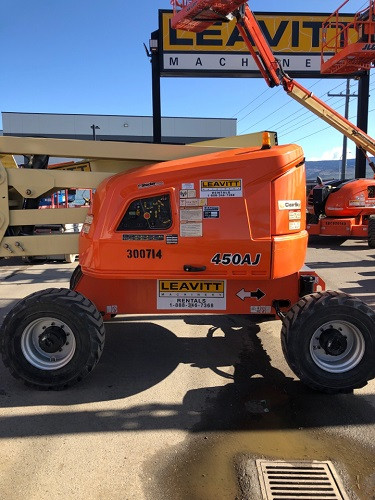
The scissor lift is unique, able to raise employees straight up into the air. Instead, the scissor lift platform rises when the linked and folding supports under it draw together, making the machinery stretch upward. When the machinery is extended, the scissor lift reaches roughly from 21 to 62 feet or 6.4 to 18.8 meters above ground. This depends on the unit's size and the purpose.
The rough terrain scissor lifts could either be powered by an electric motor or by hydraulics, although, it could be a bumpy ride for the worker in the lift going to the top. The design of the scissor lift keeps it from traveling with a constant velocity, rather than traveling slower with more extension or traveling faster during the middle of its journey.
The RT of rough terrain class of scissor lift are a very common style of lift. RT models will typically feature increased power of the IC or internal combustion engine. The variations come in gas, petrol, combinations or diesel. This is considered necessary to deal with the increased weights and steeper grades of 18 to 22 degrees which are usually connected with this particular class of scissor lift.