

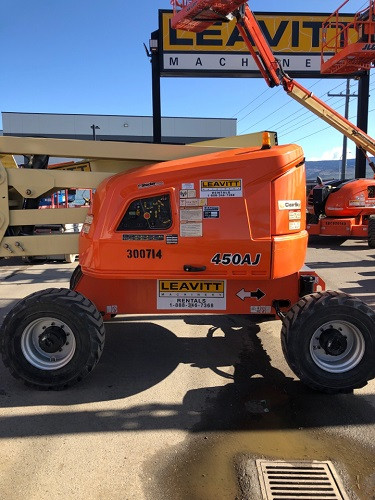


For huge building construction projects, tower cranes are used rather often. These machinery are rather essential for heavy lifting as well as positioning supplies and equipment. Tower cranes offer a different design which offers many benefits over more conventional cranes. These advantages comprise: higher vertical lift, quiet electrical operation, increased capacities, and reduced space requirements.
Hammerhead Crane
A hammerhead crane is another design which is most often associated with a tower crane. In this case, a long horizontal jib is attached to a vertical tower. One end of the jib extends horizontally over the worksite and the other end of the jib acts as a counterweight. There is a trolley on the hammerhead crane. This trolley has the lifting cable and could travel along the length of the jib. The tower crane is capable of operating anywhere in the jib's radius.
Self-Erecting Tower Cranes
A self-erecting crane is capable of completely assembling itself at the jobsite without any assistance from another crane. This provides a huge advantage in setup time and greatly saves time in equipment expenses too. Self-erecting cranes are often remote-controlled from the ground, even if there are some models which have an operator cab built onto the jib.
The self-erecting crane is usually freestanding to enable them the opportunity to be moved around. There are some models that have a telescoping tower that allows the crane to work at various heights without the need to reconfigure the tower.
Luffing Jib Tower Crane
Most urban work environments do not have enough clearance or space for the jib to freely rotate without existing buildings blocking its movement. A luffing jib tower crane is great for such confined areas. Nearly all tower cranes have a fixed horizontal jib. The driver can lower or raise a luffing jib in order to enable the crane to swing in a reduced radius.