







Forklifts
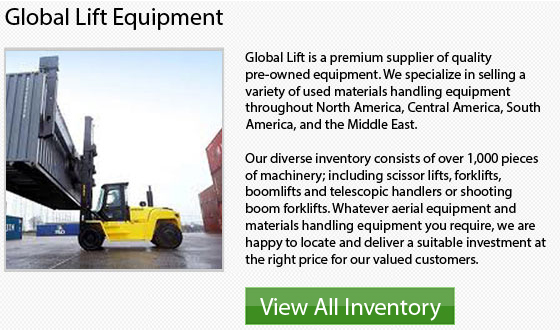
Forklifts are used to transport, lift and engage palletized loads in material handling, construction, warehousing and manufacturing applications. With manual-drive forklifts, the load or travel movement is either manually powered or walk-behind. Motorized drive forklifts have a motorized drive. In numerous kinds of forklifts, the forklift has a protected seat or cab for the driver. Fork trucks have features such as cabs, and backup alarms and are additionally motorized. Several types of forklifts are counterbalanced so as to prevent the vehicle from turning over. Other models are available with safety rails, or a rotating element like a turntable or a hand rail.
The stroke and lift capacity are other factors that you must take into consideration when choosing a type of forklift. Lift capacity is defined as the supportable, maximum force or load. Stroke is defined as the difference between completely raised and fully lowered lift positions.
Some of the other vital specifications for the forklift include fuel type and tire type. The available fuel choices are: liquid propane or LP, natural gas, CNG or compressed natural gas, electricity, gasoline, propane or diesel.
There are two basic kinds of tires for forklifts and fork trucks: pneumatic and solid. The solid or cushion tires need less maintenance compared to pneumatic tires and do not puncture as easy. Pneumatic or air-inflated tires offer load cushioning and great drive traction. At the end of the day, cushion or solid tires provide less shock absorption.
Class VII forklifts are usually designed for use on rough terrain. These equipment are usually utilized in agriculture, construction and in logging environments. Last of all, Class VIII forklifts include all burden and personnel carriers. Dual Fuel forklifts frequently fit in this class.